Joice understood enough biology to appreciate what was happening. She had even learned about gene-editing technology in school. But years of unpredictable pain had taught her to be cautiously optimistic.
After stem cell collection, Joice returned to school. She had recently gotten her driver’s license, was helping raise money for prom and was serving as junior class president.
Then came the call: It was time.
New beginnings
Joice was admitted to Phoenix Children’s and received her gene therapy infusion on November 18, 2025. It was a milestone years in the making, both for Joice and the teams that worked to bring this treatment to Arizona children.
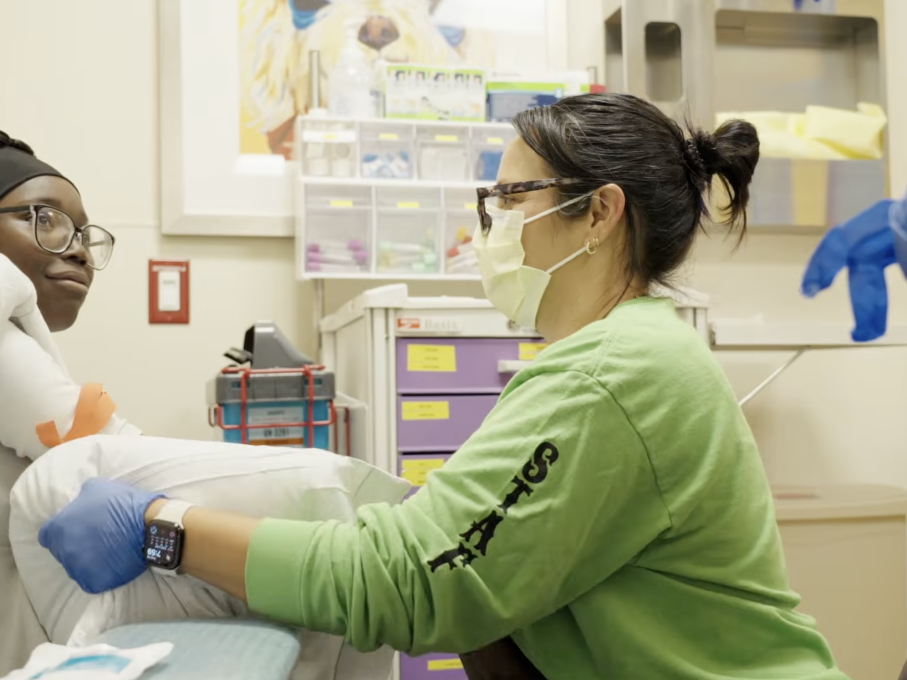
Delivering a therapy this complex requires collaboration across hematology, bone and marrow transplantation and cellular therapy, nursing, apheresis, research and more. There were nutritionists and physical therapists who supported her throughout treatment and recovery. Child Life specialists helped fill long days with activities. Nurses walked the unit with her and talked about life beyond treatment. Her parents balanced time at the hospital with work and caring for Joice’s four siblings.
Joice said that even when she was physically by herself, she never felt alone.
As she recovered, Joice began thinking about the children who might come after her, hoping what her care team learned from her experience could make the next patient’s journey even easier.
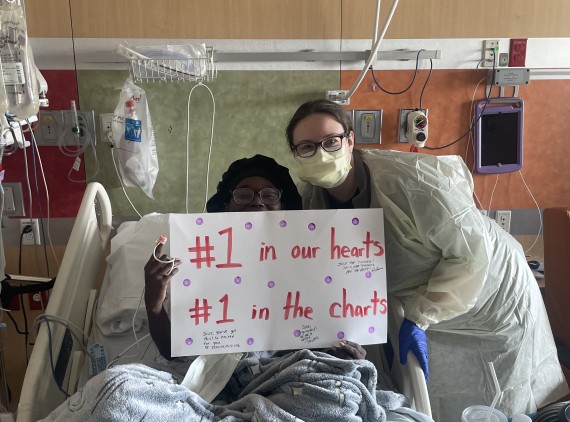
Before New Year’s, Joice got the news she had been waiting for: She was going home. Nurses lined the hallway holding streamers and cheering as she walked past, and Joice received a medal marking the completion of treatment.
By mid-March 2026, Joice had returned to school. Her care continues with careful follow-ups and long-term monitoring for as many as 15 years after treatment.
Now, one year after her infusion, Joice has gone a full year without a sickle cell pain crisis.
She can once again think about the things 17-year-olds should be thinking about: homework, friends, student council, life beyond high school and, perhaps one day, a career in pediatric medicine.
Building a destination for the care of tomorrow
Joice’s story represents more than a medical first for the health system. Phoenix Children’s Center for Cancer and Blood Disorders is the largest pediatric hematology/oncology division in the Southwest, with programs spanning hematology, oncology, blood and marrow transplantation, cellular and gene therapy, and survivorship.
Its Sickle Cell Program cares for more than 300 children and is Arizona's largest comprehensive pediatric program for the disease. Expanding access to highly specialized treatments like gene therapy brings that expertise closer to home for Arizona families and represents another step toward Phoenix Children’s vision to Improve the Health of a Generation.
In 2025 alone, CCBD cared for 4,926 unique patients across more than 22,200 appointments and recorded 1,411 new hematology diagnoses.
If your child has sickle cell disease or beta thalassemia, the Center for Cancer and Blood Disorders team at Phoenix Children’s can help families understand available treatment options, including gene therapy. Call 602-933-KIDS (5437) or request an appointment.