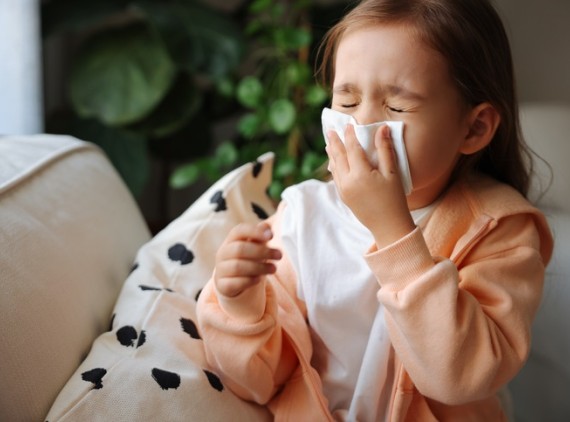
In Arizona, allergy season can start early and last for months. Common triggers include:
- Tree pollen (like mesquite and Palo Verde)
- Grass pollen
- Weeds
- Dust in the air, especially on windy days
Wind can spread pollen and dust quickly. This makes it easier for kids to breathe them in.
An allergy may be suspected if a child experiences repeated chronic cold-like symptoms that last more than a week or two, or that develop at about the same time every year.
These symptoms may include:
- Sneezing
- Stuffy or runny nose
- Throat clearing
- Nose rubbing
- Snorting or sniffling
- Itchy or watery eyes
- Dry cough
How to Prevent Allergy Symptoms
You can’t remove all allergens, but you can lower your child’s exposure.
1. Check weather and air quality
Watch for windy days and dust storms. Keep your child indoors when the air is dusty.
2. Choose the right time to play outside
Avoid playing outside on windy days. Focus on indoor play when the weather does not accommodate outdoor activities.
3. Keep indoor air clean
- Keep windows closed on windy days
- Use air conditioning
- Change air filters often
4. Clean up after outdoor time
Have your child:
- Wash their hands and face
- Change clothes
- Shower, if possible
5. Reduce dust at home
- Vacuum often
- Use a damp cloth to clean surfaces
- Wash bedding once a week
Work With Your Child’s Pediatrician to Explore Treatment Options
If your child continues to deal with possible allergy symptoms, these treatments may be advised by your pediatrician:
- Antihistamines: Help with sneezing, itching and runny nose
- Nasal sprays: Reduce swelling in the nose and help with stuffiness
- Saline sprays or rinses: Wash out dust and pollen and keep the nose moist
- Eye drops: Help with itchy, red eyes
If these treatments do not help, your pediatrician may refer you to a specialist to discuss more options.
Allergies vs. Asthma vs. Eczema
Allergies happen when the immune system reacts to something like pollen, dust or certain foods.
Asthma affects the lungs and airways. It causes swelling and narrowing, which makes it hard to breathe.
Common symptoms:
- Coughing
- Wheezing (a whistling sound when breathing)
- Shortness of breath
- Chest tightness
Asthma can be triggered by allergies, exercise, cold air or illness.
Eczema is a skin condition that causes dry, itchy, and inflamed skin. It often starts in young children.
Common symptoms:
- Dry, rough patches
- Red or irritated skin
- Itching (sometimes severe)
Eczema can flare up from triggers like dry air, soaps or allergens.
How Are Allergies, Asthma, and Eczema Connected?
These three conditions are part of what is sometimes referred to as the “allergic triad.” Many children who have one may develop another.
For example:
- A child with eczema may later develop allergies
- Allergies can trigger asthma symptoms
While allergies, asthma, and eczema are different, they are closely linked. Knowing the signs can help you get the right care for your child.
If your child has ongoing symptoms, schedule an appointment with your pediatrician for proper diagnosis and treatment. Early care can make a big difference.
Final Thoughts
Spring allergies are common in Arizona. The mix of pollen, dust and wind can make symptoms worse. But with the right steps, you can help your child feel better.
With a little planning, your child can enjoy the outdoors and stay healthy this spring.