



Active kids get accidental injuries, from bumps and bruises to broken bones. With year-round sports becoming more common, specialists in the Phoenix Children’s Sports Medicine Program can help keep your young athlete safe.
Sports Medicine Program
Share
What causes sports injuries in children and teens?
Athletes can get hurt from contact with other players or objects, but non-contact injuries are more common. These fall into two main categories:
- Overuse injuries affect bones, muscles, ligaments and tendons. They can cause stress fractures, tendonitis (inflamed tendons), and knee joint pain or swelling, known as Osgood-Schlatter disease. This damage happens more quickly in growing kids.
- Acute injuries are caused by sudden movements, falls, twists, slowing down too quickly or collisions. They include dislocated joints, concussions, sprains, broken bones, knee injuries and muscle strains.
Many sports injuries can also occur from:
- Not getting enough rest between activities
- Poor hydration or nutrition
- Inadequate conditioning
Fortunately, there are simple ways to help protect your young athlete.
How can I help my young athlete prevent sports-related injuries?
Injury prevention starts at home and continues on the field or court. Here is how to keep your child healthy and strong.
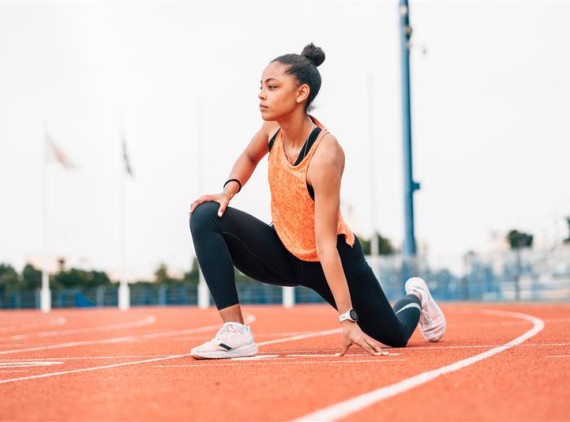
Encourage daily stretching
A proper warm-up prepares the body for activity. Arrive 15 minutes before practice for active stretching, and cool down with gentle, in-place stretching. Stretching should never be painful. Evening routines, such as bedtime yoga, can also help kids relax their bodies and minds.
Build balance, strength and flexibility
Have your athlete practice exercises like single-leg balance, toe points and flexes. These strengthen key muscles around the knees and ankles. Ask their athletic trainer or physical therapist for personalized suggestions.
Ask athletic trainers for tips and exercises
Athletic trainers don’t just treat injuries they also help prevent them through proper conditioning. Ask for exercises and advice tailored to your kid’s sport and needs.
Focus on nutrition and hydration
Proper nutrition and hydration fuel performance and recovery. Encourage a balanced diet with protein, whole grains, fruits and vegetables. Remind your athlete to drink water throughout the day, especially before and after games.
Change up your athlete’s routines
Kids once played sports for fun and variety. Now, many specialize too early, repeating the same drills for hours, which can put stress on their developing bodies.
“Studies show that if you’re a diversified athlete, your chances of competing at a higher level later on are much greater,” explained Eric Bowman, DO, a sports medicine specialist at Phoenix Children’s. Dr. Bowman encourages young athletes to play different sports throughout the year to use various muscle groups and avoid overuse injuries.
Make time for rest
Young athletes need recovery time after a busy season. Help them take breaks from organized sports and explore low-impact activities that let them stay active without pressure to compete.
What should I do if my young athlete gets injured?
Even with precautions, injuries can happen. Here’s how to help your child recover safely.
Apply ice
While waiting to receive medical attention, apply ice for 20 minutes, four to eight times a day for the first 48–72 hours after an injury. This helps reduce inflammation and swelling.
Use tape or braces to apply compression
Braces or tape can stabilize an injured joint, but should be used only as directed, for no longer than four to six weeks. Overuse of braces or tape can weaken the joint.
Remind your child that pain is a warning to rest
Pain means something’s wrong. Playing through pain can cause further damage. If your child hurts, let them rest so they can heal.
When should an injured athlete see a doctor?
Pain is your child’s way of saying they need rest or medical attention. Call a doctor if your child has:
- A head or ankle injury
- Pain that requires medicine before exercise
- Limping or inability to put weight on an injured limb
- Pain that lasts more than 24-48 hours
- Significant bruising and swelling
- Had two or more injuries in the same area within a year
Sports medicine specialists can identify nerve damage, complex sprains or fractures that may need targeted therapy. They can also test for concussions.
It takes a team to keep young athletes on their game
Keeping your young athlete healthy is a team sport. Our sports physical therapists help kids recover safely and effectively. We offer specialized rehab programs and at-home exercises to rebuild strength, improve flexibility and enhance balance.
Schedule an appointment for your athlete with Phoenix Children’s Sports Medicine Program for personalized assessment and treatment.