

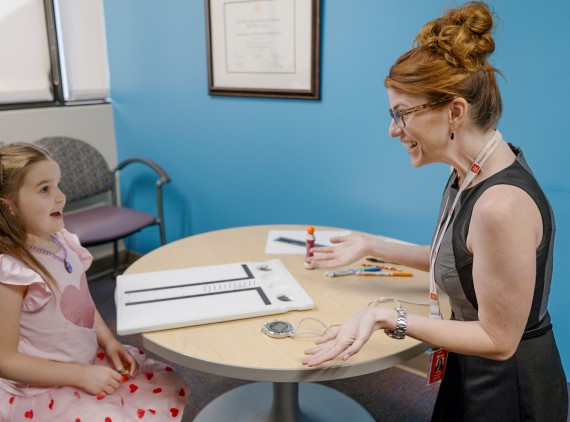


What caregivers should know about pediatric neuropsychology
If your child has been referred to neuropsychology, you may have questions about a process no one has really explained yet.
At Phoenix Children’s, we begin with a conversation to understand your child, answer your questions and determine the most appropriate next steps.
What is pediatric neuropsychology?
Neuropsychology looks at how a medical condition can affect the way your child thinks, learns and behaves. The team evaluates children with diagnosed medical conditions that directly affect the central nervous system (brain, spinal cord), including epilepsy, brain injury, brain tumors and stroke. They also evaluate children with diagnosed medical conditions that impact brain functioning more indirectly, such as sickle cell disease, congenital heart disease, genetic conditions and others. Neuropsychologists at Phoenix Children’s work closely with your referring providers as well, providing information about your child’s brain that helps with decisions about your child’s care.
A neuropsychological evaluation can help:
- Guide your child’s other doctors before, during and after procedures
- Inform recommendations and treatment planning
- Provide information to families to better understand their child’s strengths and challenges and identify supports
Many families have never heard of neuropsychology before their child is referred. And for years, that referral often came with the expectation of a full testing day before families even met the care team.
Why neuropsychology testing isn’t “one-size-fits-all”
Traditionally, neuropsychological evaluations were automatically scheduled for full-day testing appointments. While extended testing sessions are appropriate for some children, they may not be necessary for every child or situation.
We strive to tailor each evaluation to the specific needs of each child. To determine the best individualized plan for every patient, we now start with a consult to better understand what those specific needs may be before deciding on the most helpful plan.
How a neuropsychology consult helps personalize your child’s care
At Phoenix Children’s, referrals to Neuropsychology start with a 60-minute consult appointment, usually through a video visit.
“Starting with a consultation helps us understand the child before deciding which next steps would be most helpful,” said Ashley Whitaker, PhD, ABPP-CN, Chief of Neuropsychology and VP at Phoenix Children’s Health System. “Some children benefit from comprehensive testing, while others may need a shorter, more focused evaluation. Sometimes families would benefit mostly from guidance, education or a plan for supports.”
Before the consultation, the neuropsychologist reviews your child’s medical history and learns from their referring provider which questions need to be answered by Neuropsychology. During the consult, you do not need to review your child’s medical history in detail. The purpose of the consultation is for the neuropsychologist to get to know your child so they can tailor the plan to their specific needs. You can expect to:
1. Talk through any concerns you may have noticed at home, at school or through daily activities
2. Review past data from school or outside evaluations the neuropsychologist may not have access to in the medical record
3. Complete a brief examination of your child, which includes the neuropsychologist asking your child questions and sometimes completing short, standardized testing virtually
The consult also gives your child and you a chance to ask questions, learn about the process and better understand what neuropsychology is – and what it is not. Should further testing be needed, it gives each child an opportunity to get to know their neuropsychologist, so they feel more comfortable during the testing session.
Only after that conversation does the team decide whether testing is needed and, if so, how much.
“The consult takes away some of the uncertainty families often feel,” Dr. Whitaker said. “It also provides an opportunity for the family and neuropsychologist to talk through unique needs together and collaboratively determine what is best for each child.” For some children, that may mean a shorter, focused follow-up testing session. For others, a longer testing appointment may still be the right fit. And for some families, no additional testing is needed at all.
Meeting virtually also allows your neuropsychologist to take into consideration additional factors for follow-up testing, if necessary, such as working around nap times or scheduling alongside other appointments at Phoenix Children’s to reduce trips to the hospital.
What families can expect after the first consult
For many families, the consult approach replaces uncertainty with a clear plan.
Caregivers leave the visit with a better understanding of what their child may need, whether that is additional testing, school support, therapies or simply continued monitoring over time.
The goal is not to force a one-size-fits all approach. It’s to help families get answers, guidance and support that fit their child’s unique needs.
Is neuropsychology right for your child?
Neuropsychology at Phoenix Children’s supports children with diagnosed medical conditions that affect the brain or nervous system. It is different from an autism evaluation, a school learning assessment or mental health therapy. If you are unsure whether neuropsychology fits your child’s needs, start by talking with your child’s primary care provider or specialist. They can help determine whether a referral makes sense.
If your child has already been referred, learning what to expect ahead of time can help make the process feel less stressful.
What happens after?
One of the benefits of neuropsychological consultation is more frequent follow up. Historically, patients referred to Neuropsychology would complete an evaluation and then not return for at least three years for another evaluation.
At Phoenix Children’s, your neuropsychologists strive for shorter and more frequent check-ins with you and your child, which Dr. Whitaker said, “allows more immediate problem-solving to new concerns as they arise and updated treatment planning in real-time.” Oftentimes children need to adjust their supports or plan as both their medical condition evolves and their environment changes. Your neuropsychology care team recognizes that and approaches each child’s journey with the frequency of support that is most beneficial.
Read Payton’s story to see how ongoing neuropsychology care helped one Phoenix Children’s patient continue to thrive after a traumatic brain injury.
You can also learn more about neuropsychology at Phoenix Children’s and watch a short video about what happens during a visit.