
Less Painful Needle Sticks With Every Poke

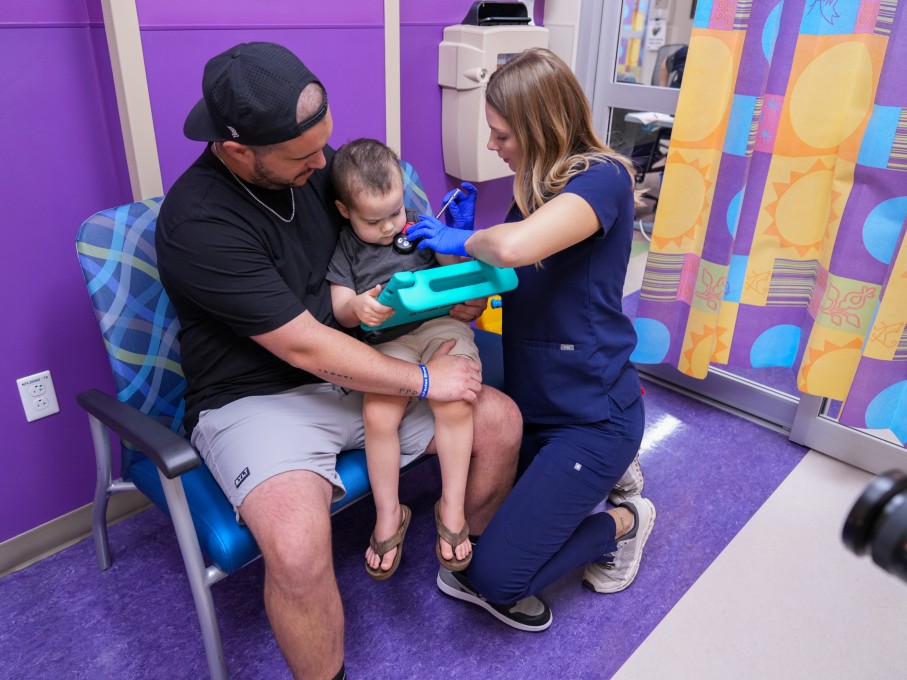
Comfort Promise is designed entirely around your child, meeting their personal needs in an often stressful moment. At Phoenix Children’s, we make Comfort Promise a routine part of every needle stick. You will not be charged differently for using any of the Comfort Promise elements. 

Every Phoenix Children’s clinical caregiver has had Comfort Promise training. That same education can be helpful to many families, too. 

Here are useful tips and information about each of the Comfort Promise services we offer:

Choices 

Choices Icon

We offer choices early and often to children and their families. Before every needle stick, we will discuss these choices, including topical numbing options, how to sit and which distraction items to use. One thing children often appreciate is being asked how much they want to know about the procedure ahead of time. We will also ask your child if they would like to watch, count or focus on their distraction item.

Teens deserve choices too. For example, it’s OK – and normal – for an adolescent to want topical numbing cream. For older children, we like to ask many questions. For example: How do you typically handle getting labs? Do you need to lie down when we do this? Do you prefer to sit up? Do you get lightheaded? Let’s have you lie down so you don’t pass out – is that OK? What did we do this time that made it better? What can we do next time to make it even better?

Every choice we offer provides a sense of control and helps your child cope.

Topical Numbing 

Comfort Promise graphic

Topical numbing decreases the skin’s sensation, making needle sticks less painful. We have several ways to decrease pain.

The right numbing option depends on the type of procedure and how quickly it needs to happen. We will explain which option(s) are best for your child. If there are several options available, we will give you and your child a choice on what to try. Some children tell us they don’t feel the stick at all. Others say it helps them feel it much less. After the needle stick, we like to ask children how topical numbing made them feel, so we can share their description with other families.

If your child needs an immediate needle stick, such as an IV, we can use a J-Tip to numb the area quickly. A J-Tip uses numbing medicine without a needle and works in just a few minutes. You can see a picture of the J-Tip, and listen to the sound it makes, on our free Simply Sayin’ app.

When a J-Tip is the best option for numbing, a nurse will identify the best spot for the procedure and place the device against the skin. You may hear a quick “pop” sound when it is used. The numbing medicine works quickly to help make the procedure more comfortable.

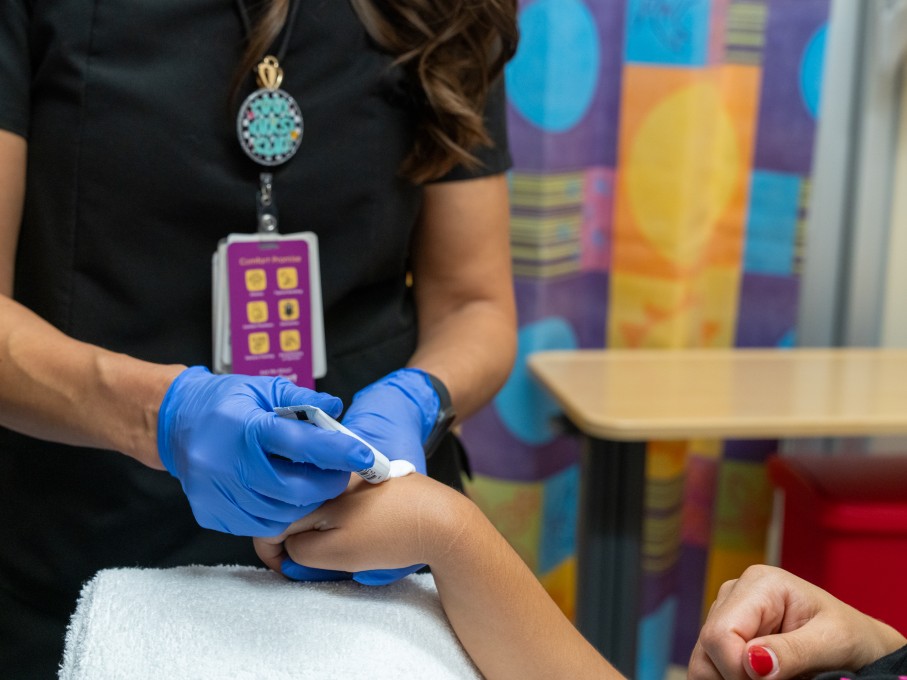
When a needle stick is planned – such as for labs, injections, IVs, port access or other procedures – numbing cream can be a great option to help make the experience more comfortable. Your child’s medical team can help determine which numbing option is best based on the procedure and the amount of time available before the needle stick.

Numbing cream needs time to fully take effect before the procedure begins. Waiting for the cream to work is an important part of our Comfort Promise.

If your child is having labs drawn at Phoenix Children’s or an outside laboratory, please know that phlebotomists (specialists trained in drawing and managing blood) are not able to apply numbing cream. If you are going directly to the lab from a clinic visit, ask your care team to apply the cream before you leave the clinic. If you are returning for labs on another day, ask your team about application instructions and whether a prescription is needed.

If your child is visiting one of our primary care offices for vaccinations and you would like to apply numbing cream before arriving, please see the instructions below. Some numbing creams are available over the counter and do not require a prescription.

Comfort Positions 

Comfort Promise graphic

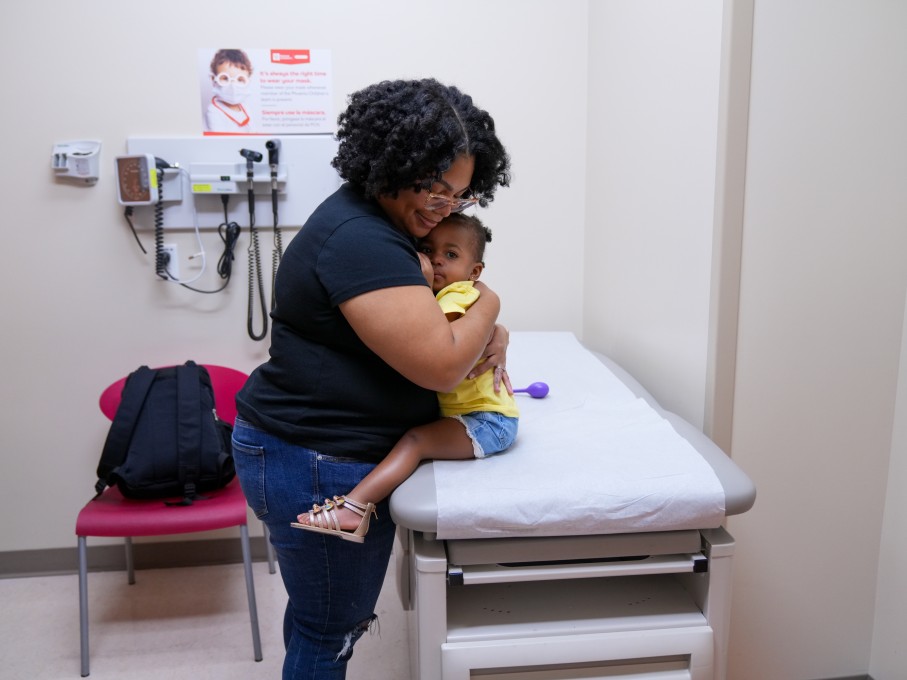
Comfort positions can help your child feel calm and secure. As soon as your child has head control, they typically prefer to be upright during a needle stick. Many children are most comfortable sitting in a caregiver’s lap. Some children prefer sitting alone in a chair or on an exam table.

Sometimes a child may require additional support to hold still. We recommend using what we call comfort holds while your child sits in your lap or on a stretcher/exam table. 

Comfort holds can include sitting:

  • Side to stomach
  • Back to stomach
  • Stomach to stomach

If your child is an infant or needs help with positioning, we can help you and your child find a comfort position that works best for your family.

Infants may be most comfortable when swaddled during a procedure. Premature infants may also benefit from gentle containment or four-handed care (which means we perform the procedure while you or someone else provides gentle comfort and touch) to help them feel calm and regulated.

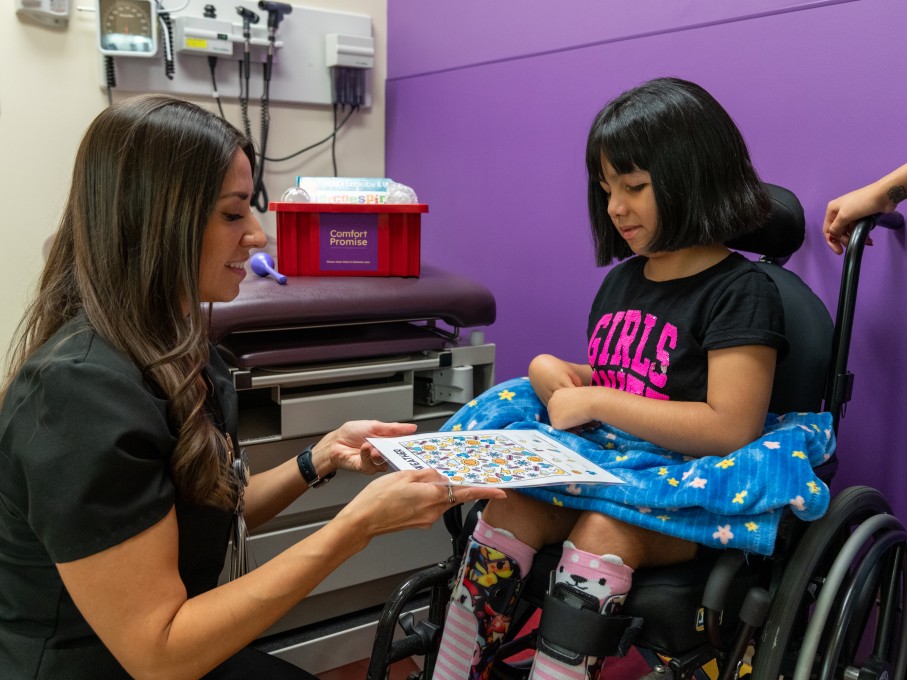
If your child uses a wheelchair or has unique sensory or support needs, please let the care team know what works best for your child and family. Some children prefer to remain in their wheelchair, while others prefer to sit with a caregiver or use another comfort position.

Distraction 
Comfort Promise graphic

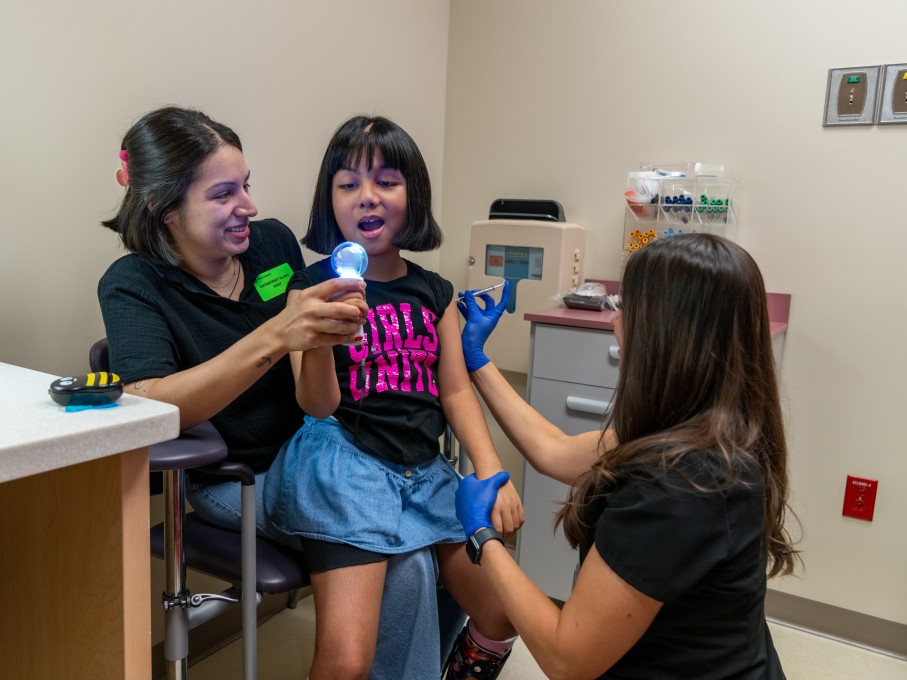
A distraction is anything that shifts attention away from the needle stick, including an entertaining activity or a device that helps change the brain’s perception of needle sticks. Popular distractions we use include toys, bubbles, stress balls, books or music. Please feel free to bring one of your child’s favorite distractions from home. We always have an assortment of age-appropriate distraction resources in places where needle sticks are common.

Distractions can also include items that can change how your child’s brain perceives a needle stick. These include:

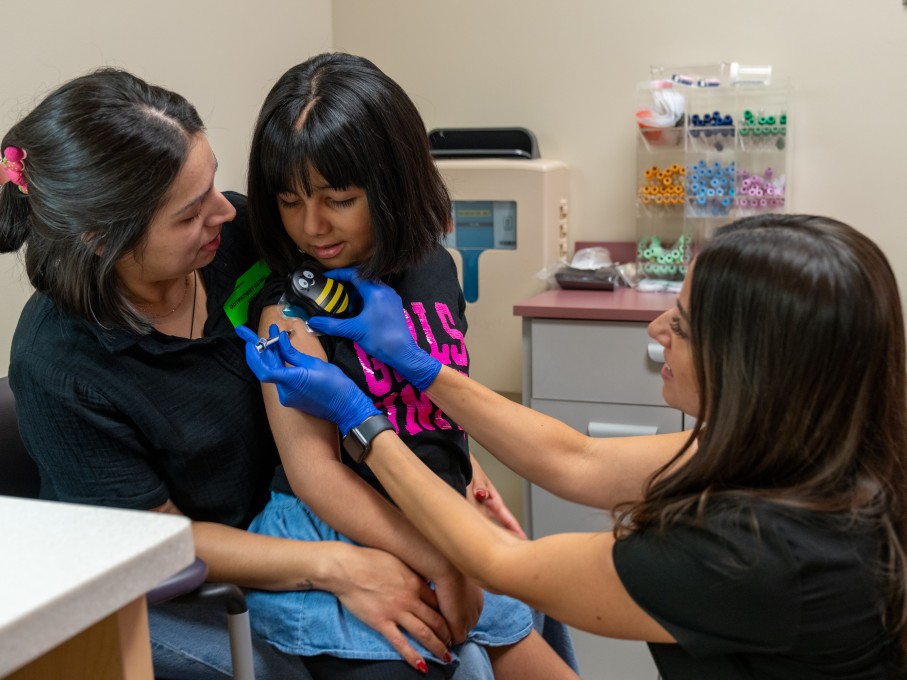
Buzzy is a device that can help reduce pain, fear and fainting during needle sticks. It looks like a small bumblebee and vibrates when turned on. When placed near the injection site, the vibration helps block pain signals traveling to the brain and provides distraction during the procedure.

Buzzy can be helpful for all ages. The vibrating body can be used alone, or the removable “wings” can be frozen and used as a cold pack to help numb the area before the needle stick. The cold wings are recommended for children ages 1 and older. Young children may need time to get used to the cold feeling, so it can help to let them feel the wings before placing them on their skin.

Children often feel more comfortable when they have a chance to explore Buzzy before the procedure. Some children like to give Buzzy a name or hold and feel the vibration ahead of time, which can help them feel more in control during the needle stick.

Buzzy devices are available at all of our locations. They can also be purchased online without a prescription or with HSA/FSA funds.

A ShotBlocker is a small plastic device that helps reduce discomfort during a needle stick. It is a good option for vaccines. The ShotBlocker is placed against the skin near the injection site, where gentle pressure and contact can help distract the brain from pain signals during the procedure.

Memory Framing 

Comfort Promise graphic

Memory framing has the biggest impact on preventing pain and helping children cope better the next time they need a needle stick. Memory framing helps your child view the experience positively by identifying what went well and what was helpful, reinforcing a sense of control and success. We will also work with you and your child to develop a comfort plan with options that will be most helpful next time.

Sucrose and Breastfeeding (for Infants 0-1)
Comfort Promise graphic

Sucrose (sugar water) and breastfeeding work well as pain blockers. If your child is less than 1 year old, we will offer you the option of sucrose or breastfeeding to help soothe them.
If you are breastfeeding and feel comfortable doing so, we encourage you to breastfeed during the needle stick. If your child uses a pacifier, please bring one to the appointment. You can also place a small amount of breastmilk on the pacifier for your baby to suck on during the procedure.

Some parents worry that if their baby begins to cry, they may choke while breastfeeding. Babies stop sucking on the breast to cry, so there is no risk of choking. However, babies can choke while drinking from a bottle. Bottle feeding is not allowed during a needle stick. Bottle feeding is allowed after a needle stick if it provides comfort to your child.

Sucrose is simply sugar water. Many studies have shown that sucrose works well as a pain blocker in infants. Sucrose is safe for children 12 months and younger. Your baby only needs a few drops of sucrose for it to be effective. This amount of sugar won’t cause harm to your baby.

If you choose to use sucrose, we will give it to your baby two minutes before the needle stick. We may administer it a few more times during the poke as well. If your baby needs blood drawn, please know that sucrose is not available at our Sonora Quest Laboratories.

Frequently Asked Questions About Needle Sticks

Most children and teens tell us that numbing cream really helps. We encourage your child to tell us what they think after the needle stick is over.

Your child’s skin may turn white or pink by the cream or patch. Although uncommon, please let us know right away if your child complains of itching or burning, if the site turns very red or if your child gets cream in their eyes or mouth. We will help you remove it.

Use the Comfort Promise steps to help make your child’s lab draw a better experience. We coordinate with Sonora Quest Laboratories. At this time, they can’t offer topical numbing cream, however, it can be applied before you go to the lab. If you are going directly to the lab from a clinic visit, ask your care team to apply the cream before you leave the clinic. If you are returning for labs on another day, ask your team about application instructions and whether a prescription is needed. You can find more information about how to apply numbing cream for planned needle sticks such as labs, injections and port access.

Sonora Quest Laboratories can offer a Buzzy device to help minimize pain.

You are welcome to breastfeed during a blood draw at our Sonora Quest Laboratories, but you may not use a bottle during a blood draw.

You may also use comfort positions to help minimize pain.

Sucrose (sugar water) isn’t bad for your baby. Because it only takes a few drops to work, it’s safe for your baby and their teeth (if they have any).

No, your baby won’t associate breastfeeding with a needle stick. Breastfeeding actually works like a pain medicine during shots. It helps your baby relax and be more comfortable.

No, your child won’t choke while breastfeeding during a needle stick. Breastfeeding during a needle stick has been proven safe by many studies, as babies stop sucking before they cry.

No, you are your child’s best source of comfort. Most children do better when their parents or caregivers are holding them or nearby.

Buzzy’s cold wings help to numb your child’s skin and the area where the medicine goes. The vibrations trick your child’s brain so they feel the buzz and not the poke.

If your child is older, let them take the lead on what choices they want to make for each Comfort Promise step. For younger children, think about what helps them feel better or what they enjoy doing at home. We can also help provide some choices that actively engage your child.

To better understand what can help your child feel better during a needle stick, ask lots of questions, such as: Would you like to try something to decrease the pain? Where would you prefer to sit? Do you want me to count first? Do you want to watch or look away?

To help your child with memory framing, ask them questions after the needle stick is over, such as: What was helpful or not helpful about what we did? What would you like to use next time so we can help you be less worried? Do we need to do anything different next time? Remind your child that they can always ask for what they need to make things better.