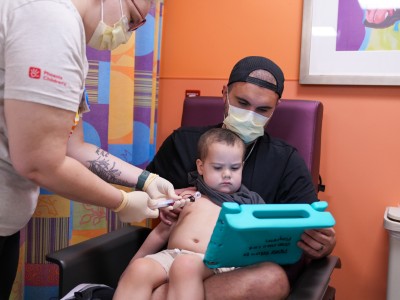
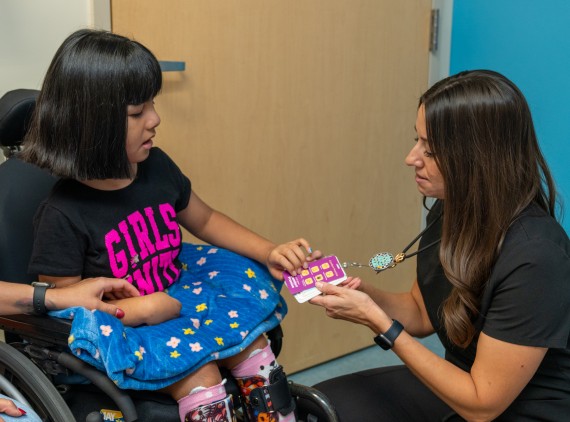
Needle sticks don’t have to be painful. While many children and teens worry about pain associated with vaccines and blood draws, there are many ways to help make needle sticks easier. Phoenix Children’s Comfort Promise is a series of evidence-based steps designed to take a lot – or all – of your child’s pain away. We offer it to every child, every time.*

Needle procedures are an important part of preventing, diagnosing and treating illness in children. Whether your child is getting a routine vaccine, having blood drawn, receiving regular injections at home or managing a port or implanted venous access device, Comfort Promise can help reduce or eliminate their pain. All of our staff have been educated on how to make Comfort Promise a standard part of care.

We offer Comfort Promise in all of our primary care provider offices, outpatient clinical settings, emergency departments and inpatient units, at no additional cost.

If your child is having labs drawn at Phoenix Children’s or an outside lab, please note that phlebotomists (specialists who draw and manage blood samples) can’t place topical numbing cream on your child. Here are instructions for how to apply topical numbing cream on your child before you go.

The Comfort Promise strategies we share here might be useful for other procedures that your child has as well. If your child has a procedure scheduled, talk to your doctor to learn more about what can be done to prevent pain.

How Comfort Promise Can Help Your Child

Comfort Promise helps your child by emphasizing choice and control. At Phoenix Children’s, we believe in the power of emotional safety. We do everything we can to ensure our staff and hospital procedures don’t cause additional stress or inflict emotional harm. If your child has a big, emotional response to a needle stick, even at a very young age, they’re going to remember that. We have tools to help shift the experience into something more positive.

Children and teens can have a negative stress response, sometimes called fight, flight or freeze. Maybe the last time your child had a needle stick, they wanted to run away. Or they cried, screamed or flailed. Perhaps they froze, because they were terrified. We’re here to change that.

We will: 

  • Offer choices to help you and your child feel more in control. 
  • Address the source of your child’s pain. 
  • Offer distractions to help your child better cope. 
  • Do memory framing after it’s over to help your child shift their memory to a healthy learning experience. 

And throughout it all, you’re going to be the safe adult to help them through it.


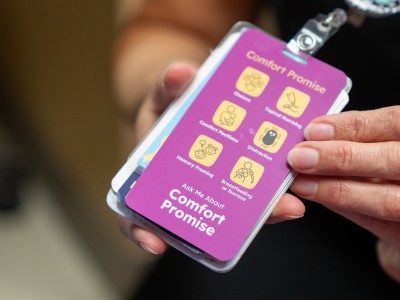
These tools and interventions, which work best when bundled together, include: 

  • Choices: Give your child a sense of control and make needle sticks easier for everyone   
  • Topical numbing: Decreases the skin’s sensation making the needle stick less painful 
  • Comfort positions: Usually involves the child sitting in caregiver’s lap but may include a comfortable position in a chair, exam table or stretcher 
  • Distraction: Puts the focus on an entertaining activity or changes the brain’s perception of the needle stick via products such as Buzzy (which vibrates and has wings that can be used as cold packs to help with numbing) and ShotBlocker (a C-shaped device with blunt, plastic points that are pressed against the skin)
  • Memory framing: Helps children frame the experience in a positive way and improve coping for future needle sticks 
  • Breastfeeding or sucrose (for infants 0-1): Soothes babies less than one year old and works as a pain blocker
Choices Icon
Comfort Promise graphic


Together, We Can All Make a Big Difference

A big part of Comfort Promise involves working with you and your child to develop a personalized comfort plan. Our ultimate goal is to make the experience better and that requires everyone – physicians, medical assistants, nurses, patient care technicians, you and your child.

If your child has stress or negative experiences from a past needle stick, we may be able to partner with Child Life Specialists who have education and training in helping children cope better.

As a Parent or Caregiver, You Play an Important Role

 One of the best ways you can support your child before a needle stick is to be mindful of how you frame the experience. It’s normal to want to try to comfort your child by saying things that you think will make them feel better. But often these statements can unintentionally cause more harm than good, especially during memory framing.

Try to avoid saying things like: 

  • “It’s just a little poke, it’s no big deal.” 
  • “It will be over before you know it.” 
  • “You won’t feel a thing!” 
  • “Be a big kid and don’t cry.” 

Memory framing includes asking your child what went well and what the team can do next time to make it better. If your child used something to help minimize the pain (such as topical numbing cream or a Buzzy), help them understand that those products helped reduce the pain.   

One of the best things you can say: “I’m here to keep you safe.” 

It’s also important to let your child know what to expect. If you need help knowing what to say, a child life specialist may be available to help. You can also download our free Simply Sayin’ app, which provides pictures, sounds and a glossary of terms for different procedures. (For example: the app plays the sound the J-Tip makes.) 

Remind your child, no matter how old they are, that it’s OK to cry when they’re afraid. Research has shown that crying is a natural way to release stress and fear. If your child cries, we’re going to remind them that everyone is here to keep them safe and tell them what we’re going to do to make it better. 

If your child has an emotional response during a procedure, often, this is what they will remember most. But if you take a few moments to reframe the experience, it can help make the next experience better. Provide positive feedback on what they did well, such as: 

“I could tell you were nervous but you did such a good job of sitting still (or listening or telling us how you felt). That was very helpful.” 

If there is something that you regularly use to help your child feel more comfortable during a painful procedure, such as a favorite distraction item, please feel free to bring it.

Resources

Numbing Cream Instructions for Blood Draw

Numbing Cream Instructions for Port-a-Cath (PAC) Access

Numbing Cream Instructions for Vaccines Age: 2-year-old child and younger

Numbing Cream Instructions for Vaccines Age: 3-year-old child and older

*Some of our vendor partners may not have access to all Comfort Promise elements.