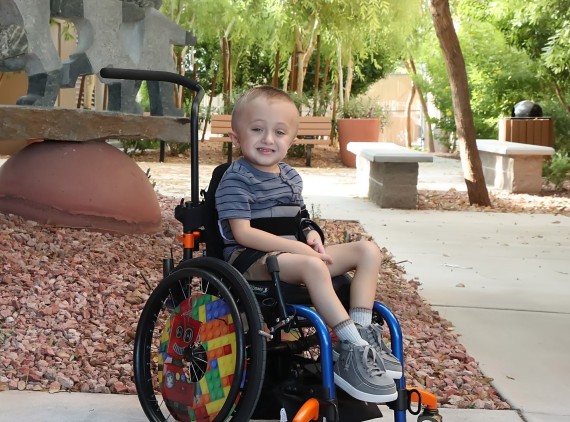
Phoenix Children’s Osteogenesis Imperfecta (OI) Clinic is the only place in the Southwest where families can meet renowned experts trained in OI (also known as brittle bone disease) and metabolic bone disease during a single visit. Our team of pediatric specialists is committed to diagnosing, treating and improving your child’s quality of life, whether their symptoms are mild or more complex.
From early infancy through the teen years, we offer expert care and guidance tailored to your child’s needs. We test and diagnose even the rarest of cases and create personalized care plans with treatments that can help reduce pain, prevent fractures and help families envision a brighter future.
Our world-class OI team includes an experienced orthopedic surgeon with expertise in pediatric metabolic bone disease who has performed hundreds of OI-related surgeries. The team also includes a pediatric clinical geneticist who excels at making diagnoses, including in unclear cases. Your child will receive leading-edge treatments that can help improve their quality of life.
Scientists have discovered more than 20 known genetic causes of OI. Our team is here to help you and your child manage the most common and the rarest types, including OI type I, OI type III and OI type IV, and other related conditions like X-linked hypophosphatemic rickets (XLH), hypophosphatasia (HHP) and fibrous dysplasia (FD). We also look at your family’s full health picture by offering family risk evaluations, so you can make confident decisions moving forward.
In a continual effort to pursue groundbreaking developments in OI and metabolic bone disease, Phoenix Children’s OI Clinic is one of just a select number of sites that are part of the Longitudinal Study of Osteogenesis Imperfecta conducted by the Brittle Bone Disorders Consortium. This research study is funded by the National Institutes of Health and seeks to improve the health and quality of life of people with OI disease.