Share


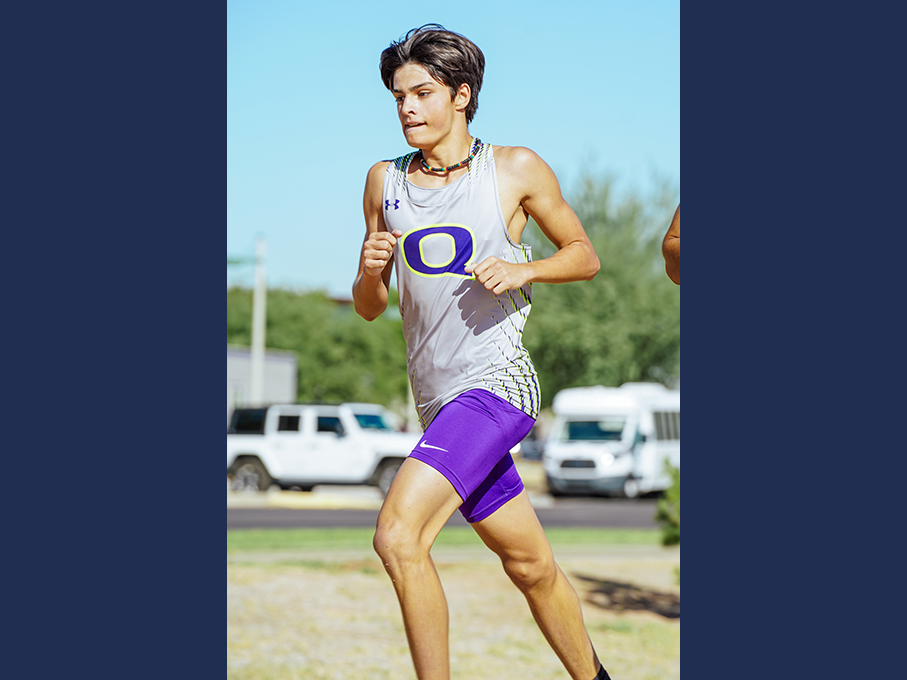
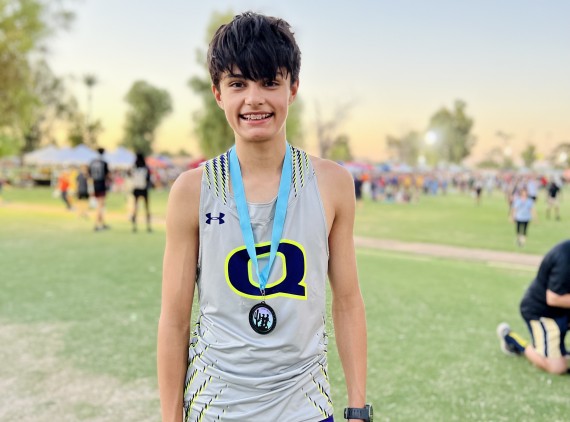
Eli had been living with scoliosis for years and was active on his high school cross country team, often running as many as 70 miles per week.
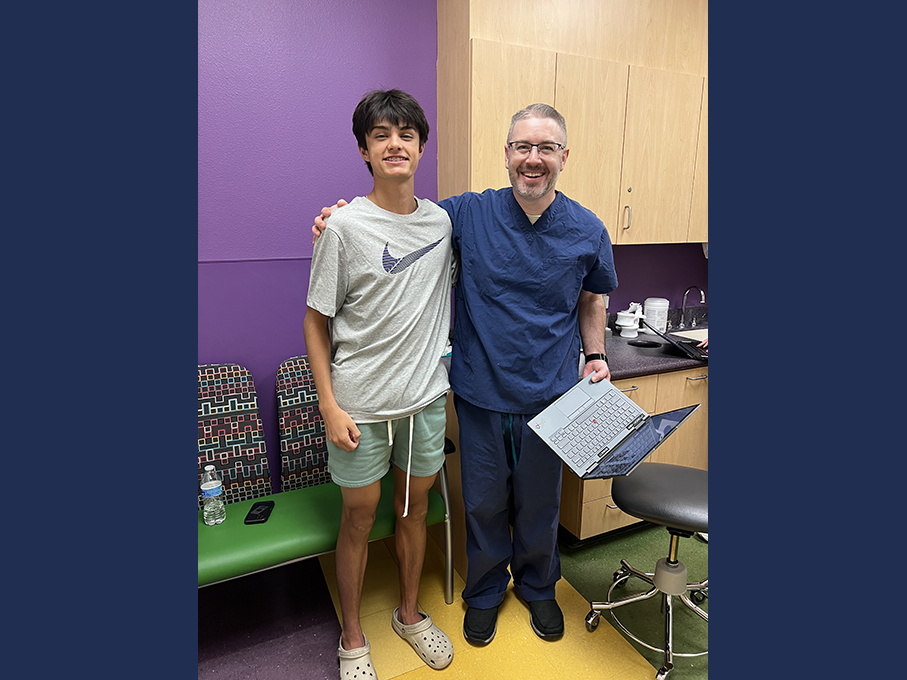
Before coming to Phoenix Children’s in 2023, one of his care providers noticed his back was a little uneven and diagnosed him with scoliosis. As time went on, the curve of his spine worsened. His mom, Karla, knew Eli would require specialized care. She really wanted him to see orthopedic surgeon David Bennett, MD, after hearing great things from other families.
“Dr. Bennett specializing in pediatrics made a huge difference,” Karla shared. “He has a lot of surgeries under his belt and is so knowledgeable.”
Dr. Bennett confirmed Eli’s diagnosis – adolescent idiopathic scoliosis with a progressive curve, meaning it was getting worse and may eventually qualify for surgery.
“We started off not recommending surgery because Eli hadn’t quite hit the threshold of where the curvature would definitely keep progressing,” explained Dr. Bennett. “We never want to operate on someone who doesn’t need it.”
To monitor Eli’s spine curvature, Dr. Bennett saw Eli every six months for an EOS full-body X-ray. Patients at Phoenix Children’s benefit from the EOS X-ray’s significantly lower levels of radiation compared to standard chest X-rays.
The race that changed the surgery timeline
During runs, Eli sometimes noticed a tingling in his back, pain in his side or trouble breathing. His condition worsened at a big cross-country race when he nearly collapsed at the finish line as he clutched his side, unable to catch his breath. Eli assumed his breathing trouble was due to his asthma, but an onsite medic believed it was scoliosis related.
The next week, Eli and his family met with Dr. Bennett to discuss surgery options, and Eli’s surgery was scheduled within a month. By that point, his spine had rotated 57 degrees and had surpassed the low-end threshold for surgery — typically 45–50 degrees.
A big day for Eli and his family
Eli received a posterior spinal fusion at the Center for Spine Care at Phoenix Children’s in December 2024. Orthopedic surgeries at Phoenix Children’s involve a specialized team of pediatric surgeons, operating room (OR) nurses and staff, scrub techs and anesthesiologists.
During a spinal fusion, an orthopedic surgeon makes an incision in the spine. Through the incision, they place screws and rods to correct spine structure and fuse the area into one unit.
As part of the procedure, Phoenix Children’s surgeons use computed tomography (CT) intraoperative guidance. This technology makes surgery less invasive and more effective because it helps ensure everything, down to the millimeter, is in a good position.
Eli’s surgery took about five hours and his family was grateful for the constant updates they received on their phone and directly from the care team. Following the surgery, Dr. Bennett met with Eli’s parents to show them the new X-rays and how Eli’s spine was much better aligned.
The road to recovery
After surgery, Eli spent four nights at Phoenix Children’s before he was discharged home. Recovery at home included lots of time in the recliner, in bed and on walks with his grandpa.
At every follow-up visit with Dr. Bennett, Eli had one question: “When can I run?”
After three months of recovery and monitoring, Eli got the OK to run. Dr. Bennett advised Eli to take it slow, ease into it and see how his body does. Eli noticed positive changes and enjoyed moving again. Within a few weeks, he was running high school track and field and even competed in the state championship at the end of the season. He can’t wait to see what he can accomplish next season.
Looking ahead with confidence
Eli and his mom agree – surgery was the right decision. Some of his future goals include placing in the top 20 at the Arizona high school cross-country state finals, running a mile in under four minutes for a Division I university and eventually competing in the Olympics.
“I knew I wasn’t going to meet my goals without surgery,” he said. “If you do sports, you’ve got to trust the process.”
Karla added, “It’s a major surgery for kids, but I can’t think of us not doing this for him. We’re very happy with Phoenix Children’s, Dr. Bennett and the outcome we had. Everything was so positive.”
Dr. Bennett has no doubts that Eli will continue to thrive after his surgery.
“Athletes with spinal fusions at the level Eli had have competed at the Olympics,” he said. “Our hope is that this doesn’t limit him. We want surgery and scoliosis to fade into the background of life, and most of the time it does.”