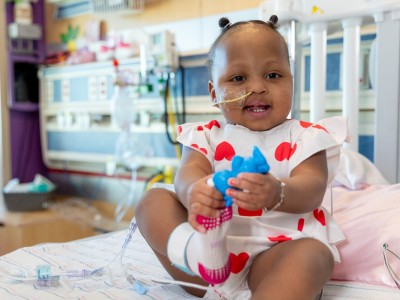

The Heart Transplant/Heart Failure Program at Phoenix Children’s provides innovative, multispecialty care for children with heart failure. Our team of experts uses the latest medical advances to treat and manage heart failure and improve the patient’s overall wellbeing.
A patient with heart failure has a sick heart that can’t pump enough blood to meet their body’s demands. The condition can cause fatigue, decreased appetite, excessive sweating and trouble breathing. Several conditions may be responsible for pediatric heart failure, including congenital heart defects and acquired or inherited heart disease. Heart failure may also be called advanced or end-stage heart disease.
Although heart failure is a serious health condition, the leading-edge treatment options and innovations available at Phoenix Children's Center for Heart Care can lessen its impact. We are one of the only programs in the Southwest to feature comprehensive heart failure care.
Our team is led by fellowship-trained multispecialty pediatric cardiologists with a passion for helping children and their families.
We offer:
- Heart transplant for patients with end-stage heart disease
- Advanced heart failure management
- Mechanical circulatory support (MCS) using artificial heart pumps, ventricular assist devices (VAD) and total artificial hearts to support patients who are critically ill
Improving Care Through Research
Our team includes clinical experts involved in novel research to improve available treatments. We collaborate with other health leaders to develop and refine life-changing techniques and technology. For example, Phoenix Children’s Center for Heart Care partnered with Arizona State University to improve the development of complex customized heart models. These models help doctors study disease, inform families, and guide presurgical planning.
Our work has led to several life-saving innovations, including:
- 4D Cardiology Visualization and Analytics (CAVA) Lab – Focused on improving pediatric care by developing new, innovative tools and solutions using engineering, computer science and machine learning to solve medical challenges.
- Cardiac volumetrics – Using advanced imaging technology, doctors can use heart volume and size rather than weight to match donors and recipients. Developed at Phoenix Children’s, this innovative process expands the pool of potential donors, shortens wait times and saves lives.
Why Choose Us?
- Revolutionary transplant care. Phoenix Children’s developed and introduced volumetric size matching. This groundbreaking process expands our donor pool by allowing us to match hearts that might seem too large based on their weight but fit well when using heart size as one of the deciding factors, resulting in faster organ matching and reduced wait times.
- Reduced risk of rejection. Some patients face an increased risk of organ rejection due to antibodies they develop after blood transfusions or surgery. Our doctors have improved care for patients like these by developing virtual crossmatching techniques to identify good matches and reduce rejection risk.
- Comprehensive multispecialty care. We offer holistic care that addresses every aspect of the patient’s health. Our care teams include experts in cardiology, interventional cardiology and lung and kidney care. They also feature nutritionists, psychologists, social workers, and rehabilitation specialists with extensive training and skills in treating children with complex heart conditions.
- Seamless pre- and post-transplant support. Once a patient is listed for a transplant, our team takes over their cardiac care. We provide monthly follow-ups and continuous heart failure management throughout the wait for a donor's heart to become available.
Frequently Asked Questions
Here are answers to some of the questions you may have about our program.
Our Transplant Coordinators and Advanced Practice Providers are also available to offer support, answer questions and guide you through every step.
Donor organs come from deceased heart donors who participated in an organ donation program. Family members donate a family member’s organs after a fatal illness or accident.
The transplant team at Phoenix Children’s closely evaluates the patient’s compatibility with the donor, including blood type, body and heart size, and physical condition. Distance, wait lists and other details also play a part in the decision. Advanced imaging and other capabilities allow our doctors to expand the donor pool for patients waiting for a heart transplant. This can lead to shorter waiting times.
Once a patient is approved for a transplant, the patient’s name is shared with the Organ Procurement Transplant Network (OPTN) contractor(s). The OPTN oversees organ donation and distribution, prioritizing recipients in the United States.
Wait times can range from days to years. Although specialists prioritize organ donors from close locations, patients can receive a donated heart from anywhere within the United States. Heart transplant specialists at Phoenix Children’s examine the organ to ensure it’s healthy and compatible.
Our team will guide you through each step of the transplant process, so you know what to expect.
After the patient receives a general anesthetic, doctors put them on a heart-lung machine to circulate blood throughout the body. Surgeons open the chest to remove the patient’s diseased heart and implant a new heart in its place. Doctors remove the heart-lung machine once the blood vessels have been reattached, and the new heart is in place and is beating on its own.
Transplant surgery can take four hours or longer, depending on the patient’s condition. Our team will keep you informed throughout the surgery.
The patient will awaken gradually and may feel groggy as the anesthesia wears off. A breathing tube attached to a ventilator provides respiratory support for a day or two after surgery, so the patient will not be able to talk. Medicines will help them rest and relieve any pain. Doctors will discuss the patient’s condition and the post-surgery healing process.
After surgery, specialists in our cardiovascular critical care unit (CVICU) work with the transplant team to manage post-transplant care, including advanced, round-the-clock monitoring. They treat surgical wounds and manage IV pain medication, ventilator care, feeding and fluid-drainage tubes, and medication, including antibiotics and anti-rejection drugs.
Once your child has recovered further, doctors determine whether they are ready to move to a lower intensity hospital room at Phoenix Children’s Center for Heart Care. Most children go home within one to three weeks after transplant surgery.
Your care team will review discharge plans and thoroughly explain any instructions regarding home care, follow-up appointments, and wound care. They will also outline how to recognize and report potential complications and get help with questions or concerns.
Recovery includes specialized cardiac rehabilitation, including respiratory, physical, and occupational therapies to help the patient exercise, heal and build strength.
Doctors reduce and adjust medications as the patient recovers, but the patient will require anti-rejection medication and regular heart monitoring and checkups throughout life. Although it’s a challenging process, with expert care and healthy lifestyle habits, most patients enjoy renewed vigor and a good quality of life after a heart transplant.
Locations