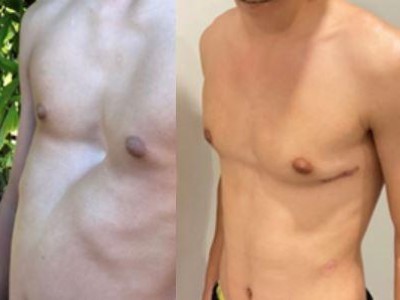

Chest wall deformities occur when the breastbone (sternum) and ribs develop in a way that makes the chest look sunken, makes it stick out or causes it to be uneven. Although differences in your child’s appearance may be the most visible health issue, chest wall deformities can also affect your child’s breathing, endurance and how well their heart works.
Phoenix Children’s Pectus Center is Arizona’s only pediatric program dedicated exclusively to caring for chest wall deformities. Our team of pediatric specialists provides comprehensive, personalized care for children with chest wall conditions that affect the shape and function of the chest, including pectus excavatum (sunken chest), pectus carinatum (pigeon chest), pectus arcuatum and slipping rib syndrome.
We’ll guide you through every step of your child’s health care journey with compassion, advanced expertise and care designed specifically to meet the unique needs of our pediatric patients and their families.
Why Choose Us?
- Exclusive pediatric care: Phoenix Children’s is one of the only centers in Arizona with a program dedicated solely to caring for children with pectus and other chest wall deformities. We tailor every diagnosis, treatment and therapy to meet your child's unique needs as they grow and develop.
- National leader: Our surgeons have performed more than 1,000 Nuss procedures, making our program one of the busiest and most experienced in the nation. This advanced level of expertise leads to safer surgeries, excellent outcomes for your child and greater peace of mind for your family.
- Destination for complex care: Families and physicians across the country and around the world rely on our team for second opinions and repairing procedures that were unsuccessful elsewhere. This reflects our proven ability to handle even the most challenging cases with skill and expertise.
- Trusted expert resource: We host national and international training courses that teach advanced techniques to surgeons worldwide. By sharing our knowledge and techniques, we help ensure children everywhere benefit from the most effective approaches to care.
Leading the Way in Pectus Education
Phoenix Children’s has been a recognized leader in pectus education since 2014. Every two years, hundreds of surgeons learn the latest, most innovative techniques in chest wall care at our Phoenix Advanced Pectus Course. In 2024, our team hosted the Chest Wall International Group Conference, bringing together more than 200 experts from around the world to share and learn.
We've been named a Center of Excellence by the creator of the Nuss procedure, Dr. Donald Nuss. This distinction reflects our deep commitment to advancing care for children with pectus conditions and sharing our knowledge with others to improve care options for children with chest wall deformities everywhere.
Frequently Asked Questions about Pectus and Chest Wall Deformities in Children
Find answers to common questions about chest wall deformities, treatment options and how these conditions may affect your child’s health.
Some chest wall differences are present at birth. However, most are not noticeable until your child has a growth spurt, such as the start of adolescence.
Although some minor chest wall differences can appear less noticeable as your child grows older, moderate to severe conditions typically require treatment to achieve the best results.
The best time for pectus surgery varies from patient to patient. However, treatment for pectus is usually most effective around age 12, or the beginning of adolescence, when children are growing rapidly. Our team helps you decide on the timing that’s safest and most effective.
For some children, treatments such as vacuum bell therapy can help improve a sunken chest without the need for surgery. For children with more significant chest issues, the minimally invasive Nuss procedure offers an option that’s safe, effective and gets results. Our team will help you determine what care options are the best fit for your child.
Yes. Chest wall depressions may cause shortness of breath, chest pain and excessive fatigue. In more severe cases, pectus excavatum can affect how well your child’s heart and lungs function. The condition also affects mental and emotional health and often impacts self-esteem, confidence and overall quality of life.
Related Services
Locations