


Specialized Cleft & Craniofacial Care for Children and Families
At Phoenix Children’s, our highly trained team of specialists offers the widest range of treatments for infants, children and adults with cleft and craniofacial differences – from cleft lip and palate to craniosynostosis.
The Most Experienced Cleft & Craniofacial Program in the Southwest
When you come to Phoenix Children’s for cleft and craniofacial care, you gain access to the largest and oldest program of its kind in the Southwest.
More than 40 years ago, we started as the Southwest Craniofacial Center. Years later, the program became the Barrow Cleft and Craniofacial Center. Now, we’re proudly known as Phoenix Children’s Center for Cleft and Craniofacial Care. Though our name has changed over the years, our commitment to excellence in patient care has stayed constant.
At our Center, we help patients with facial differences navigate every step of their care journey. We have the only craniofacial team in Arizona with approval from the American Cleft Palate Craniofacial Association (ACPA). So, you receive vetted expertise with compassionate, coordinated support.
Bringing Multiple Specialties Together for Exceptional Care
Craniofacial differences can be complex, and treatment is unique to each patient and family. That’s why we use an interdisciplinary model of care. We bring together over 20 craniofacial subspecialists with experience in different areas of medicine, so you get the exact care you need.
Your care team partners with you to develop a thoughtful, personalized care plan that helps achieve the best possible outcomes for you. From physical appearance and functional challenges to emotional coping, your team ensures you receive support for every aspect of your child’s condition.
Welcome to Our Outpatient Center
The outpatient Center for Cleft and Craniofacial Care spans more than 10,000 square feet and is home to our cleft and craniofacial team clinics. You can receive speech-language therapy, craniofacial orthodontics and behavioral health services here – making it easy to get all the care you need in one place.


Guidance & Support at Every Step – From Diagnosis to Surgery & Recovery
At the Phoenix Children’s Center for Cleft and Craniofacial Care, we support:
- New or expecting parents of a child diagnosed with cleft lip, cleft palate or other craniofacial condition
- Older children or teens with craniofacial differences who want a care team
- Adults with craniofacial care needs
After a cleft or craniofacial diagnosis, most of the time, you’ll meet with a plastic surgeon for a one-on-one consultation before you meet the full care team. During this visit, we explain the diagnosis, review possible treatment options and answer your questions. The goal is for you to leave feeling informed, supported and confident about the path ahead.
Related Services
As part of Phoenix Children’s Center for Cleft and Craniofacial Care, you also have access to specialists who can help with dentistry, orthodontics and speech pathology. Other related services include:
Locations


Phoenix Children's Center for Cleft and Craniofacial Care - St. Joseph's Campus
124 W. Thomas Rd.
Suite 320
Phoenix, AZ 85013
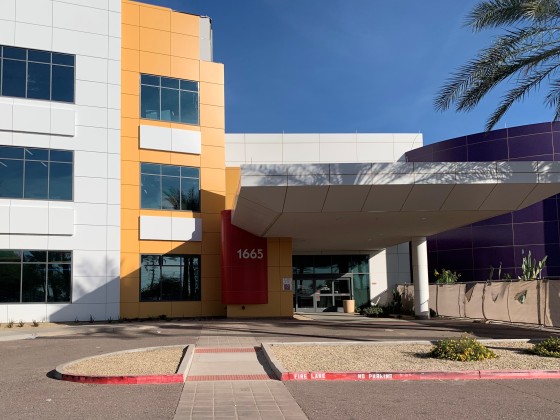
Phoenix Children's Specialty Care - Avondale Campus
1665 N. Avondale Blvd.
Avondale, AZ 85392

Patient Resources
- American Cleft Palate Craniofacial Association (ACPA): Brings together individuals and healthcare professionals who are interested in clinical care and research advancements for those with cleft and craniofacial conditions. ACPA, a nonprofit association, is unique because it has more than 2,500 members who represent more than 30 disciplines in 60 countries to support patients and families and ensure the best outcomes. They provide information to educate patients and families.
- American Speech-Language-Hearing Association: Commits to ensuring that all people with speech, language and hearing challenges receive services to help them communicate effectively. Their website offers resources to help you understand communication and communication disorders.
- The Emily Center: Offers a free, public, health information library located at Phoenix Children’s. The library is staffed by highly skilled nurses to conduct research for any family member.
- Encircle Families: Exists to improve the lives of children with a full range of disabilities, from birth to age 26, providing training, information and individual assistance so families can become effective advocates for their children.